 LexisTV
 Lexistech Solutions
It’s Discriminatory" — Reuben Abati Slams Works Minister Dave Umahi Over Plan to Decorate First Niger Bridge with Tinubu’s Pictures
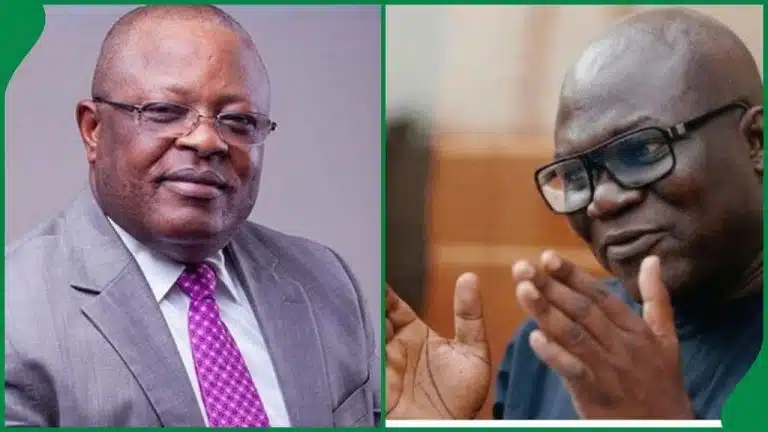
Photo:[Image used for illustrative purpose only]
Former presidential aide and broadcast journalist Reuben Abati has strongly criticized the Minister of Works, Dave Umahi, following his directive to adorn the First Niger Bridge exclusively with portraits of President Bola Tinubu.
The controversy began when Umahi, while inspecting ongoing rehabilitation work on the historic bridge, ordered the removal of all illegal advertisements, declaring they should be replaced with pictures of President Tinubu to acknowledge his contributions to the South-East region.
### "It Is Public Money, Not APC Property"
Rebuilding and maintenance funds belong to the nation, Abati emphasized during Thursday's broadcast of Arise Television’s *Morning Show*, arguing that monopolizing public infrastructure for political branding crosses a line.
> *"Where I disagree with him is the Minister saying the bridge should be decorated only with the posters of President Bola Tinubu. No, that’s discriminatory. In a political season, no,"* Abati stated.
Abati noted that with political activities ramping up across the country, public spaces funded by taxpayers must maintain fairness for all political contenders rather than favoring the ruling party.
### Calls for Equal Access or Zero Posters
Abati laid out a clear alternative: either open the public space to all registered political parties, or keep political campaign materials off the bridge entirely.
> *"The posters that should be there should be the posters of all candidates. It’s campaign season. People can campaign. If posters are going to be there, there should be no monopoly. Every candidate should be allowed to have a say,"* he added.
> *"If there will be no poster, then even President Tinubu’s poster must not be there. There should be no discrimination because the money that the Ministry of Works used to rehabilitate that old bridge is Nigerians’ money. It is our money. So whether you are AA or you are ZLP or you are whatever, you can have access to that road."*
Umahi's directive has sparked widespread debate over the use of public infrastructure for political promotion, with critics and commentators urging federal ministries to maintain political neutrality when managing public assets.










Comments